FOR INDEPENDENT LIVING
A little support.
A greater sense of
freedom.
The right support can make everyday life easier. Discover bed trapezes and standing aids that help you feel more independent at home.
 Illustrative room scene · AI-generated
AS INDIVIDUAL AS YOUR EVERYDAY LIFE
For every need.
The right support.
Freestanding or permanently fitted —
find the solution that suits you and your bed.
YOUR NEXT STEP TOWARDS MORE FREEDOM
Small supports. A big difference.
“Find this model” opens a search for the named model on Amazon.com. Offers and availability may vary.
Links marked * are Amazon affiliate links using the tracking ID bettgalgen.de-21. Check Amazon.com for current prices and availability.
KNOWLEDGE THAT HELPS
Feel informed.
Choose with confidence.
The key answers about choosing,
fitting and everyday use of a bed trapeze.
WHY BETTGALGEN.DE
Independence feels
good.
We make the selection clear. With concrete models, understandable explanations and an eye for the things that count in everyday life. For you. Or for someone you care about.
THE COMPLETE GUIDE FROM THE ORIGINAL WEBSITE
Bed trapezes and standing aids: read the complete guide
Bed trapezes and standing aids: more freedom of movement and everyday safety
When sitting up in bed becomes difficult, every small movement can be a challenge: turning over, sitting up, transferring to a wheelchair or standing safely. A bed trapeze, also known as an over-bed mobility aid, provides a firm handle above or beside the bed so the user can use their arms to help raise their upper body. This may be useful during ongoing care, after an operation or injury, during rehabilitation or with long-term mobility limitations. The aid needs to suit the situation. Some people need a fixed installation; others benefit from a freestanding model that requires no structural alterations. Handle shape, height adjustment and reach also matter, so the aid can be used comfortably without awkward twisting. A well-chosen aid may make transfers easier, reduce the effort required from relatives and help manage the risk of falls. It should suit the room, be ready when needed and help the user regain a sense of control. This guide explains the main types of bed trapeze, fitting and adjustment, safety and costs, and additional products — from bed mobility aids to bed rails — that may make everyday life easier.
Understanding bed trapezes: types and uses
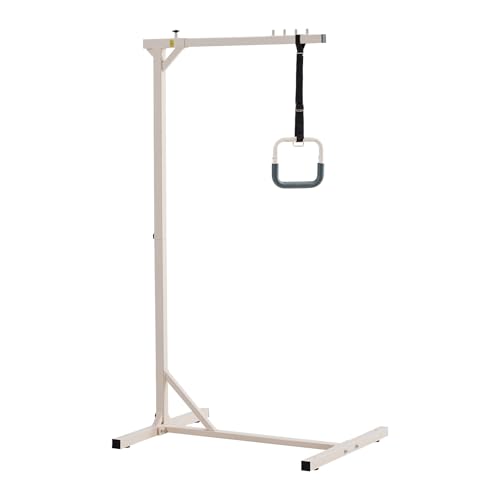
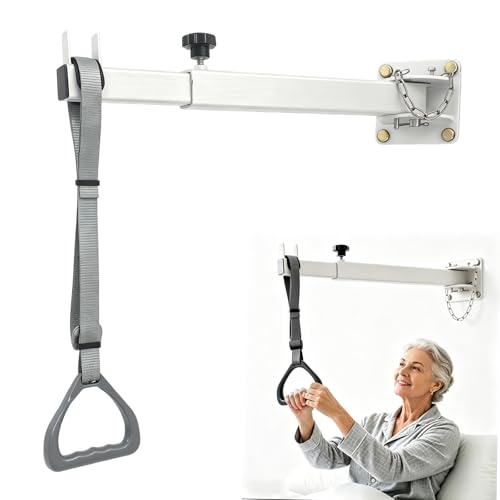
A bed trapeze is essentially a bed mobility aid that places the handle where it is needed: within reach of the hand when sitting down or pulling yourself up is no longer possible reliably. In practice, the models differ primarily in how they are attached and how flexible they can be used. For many living situations, the stationary solution is interesting, in which the boom is permanently installed and is therefore permanently available - especially if the bed has a fixed place and the support is needed in the long term. It's worth taking a look here Wall-mounted bed trapezes, because this variant frees up space on the bed and provides a clear, stable gripping feeling. However, if you don't want to mount it on a wall (rented apartment, frequent changes, changing needs), you can freestanding bed trapezes a solution that works regardless of the building structure and is often easier to reposition. The type of bed also plays a role: a care bed often offers suitable holders or accessory standards, while normal beds have different requirements depending on the frame, height and slatted frame. The category is specifically for that Bed trapeze for a standard bed helpful because it focuses on practical solutions without a care bed setup. And when mobility is a priority - for example in rehabilitation, when changing rooms or when the aid needs to be stowed away when needed - they are portable bed trapezes particularly interesting. Regardless of the model, what is important is that a bed trapeze does not replace therapy, but it can make movements more controlled, reduce fear of coming up and give back the moment of independence - exactly when every little help makes a big difference.
Fitting and adjustment: making the handle useful
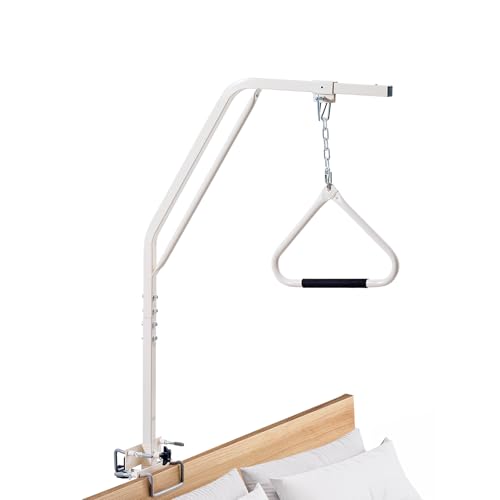
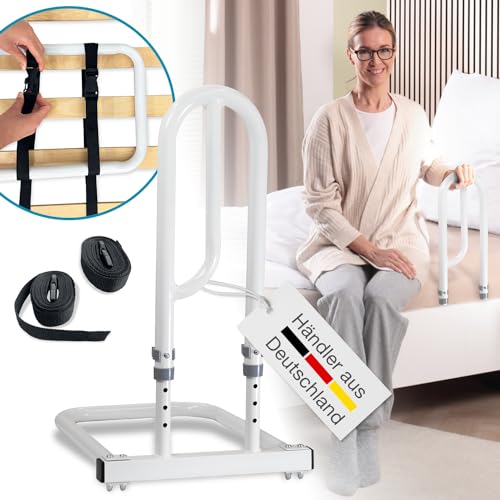
For a bed trapeze to be useful in everyday life, its position and adjustment need to be right. A common problem is a handle that can be reached but hangs too high, too far to one side or at an awkward angle. The user may then pull suddenly or twist their body. Ideally, the handle follows the natural line of the movement: the hand grips it and the upper body rises in a controlled, stable way. An adjustable strap or chain allows the handle to suit different sitting and lying heights. For a fixed installation, consider whether the bed is regularly repositioned during care and whether the handle needs to swing aside when not in use. Some households may also benefit from a second, lower support, such as a side bed handle for moving from sitting to standing. A useful starting point is the category Bed mobility aids as an overview, while Bed mobility aids specifically describes variants that do not require complicated assembly and are often fixed under the mattress or on the frame. When it comes to nursing care beds, it's worth taking a closer look Bed trapezes for care beds, as other attachment points and standards may play a role here. And very important: the best setting is the one that is actually used in everyday life. Therefore, do not plan the adjustment “on paper”, but along typical processes: set up in the morning, relocate during the day, reposition at night. If the hand automatically finds the handle and the movement works without hassle, the assembly has been successful.
Safety, load capacity and costs: what matters
Safety is particularly important with aids used around the bed. Tiredness, pain, dizziness or limited coordination may already make movement difficult. Check the stability of freestanding models, the fixings of wall- or bed-mounted models, and whether the user can move without sudden pulling. A realistic assessment of arm and upper-body strength is essential. A bed trapeze is intended for someone who has enough strength to help pull themselves up in a controlled way. Where this is not possible, another transfer aid or approach may be more suitable. Also consider the area around the bed. Trip hazards, soft mattress edges or a lack of appropriate side support may leave someone unsteady after sitting up. Where additional protection against falling is needed, suitable options include Bed rails as a starting category, while Bed rails for adults specifically addresses the needs of adult users. In addition to the product selection, the question of cost often plays a role: In the context of care, accessories can be reimbursed depending on the situation and doctor's prescription, especially in the case of care beds and a clear need. It is crucial that the need is clearly documented and that the aid improves independence or safety of care. Regardless of this, it is always worth taking a look at durability (material, workmanship), easy-to-use adjustments and use that remains calm and controlled in everyday life. A bed trapeze is safe if it does not encourage “tests of courage”, but rather makes movements plannable and repeatable – day after day.
More independence every day: useful additional aids
A bed trapeze is often the starting point - but not always the whole solution. Many sufferers benefit most from a combination of several, well-coordinated aids that cover different phases of movement: sitting up in bed, transferring to the edge of the bed, getting up and later also personal hygiene in the bathroom. For example, if you lie restless at night or are unsure when moving during the day, this would be a useful addition to the bed area. For the bathroom, a lift or a standing aid can be crucial so that personal hygiene does not become a risk of falling. That's exactly why there are solutions like this Electric bath lift, which can make getting in and out easier when strength or balance is limited. Different options may suit different needs, such as electric bath lifts (comfortable and controlled) or inflatable bath lifts (space-saving and often easy to handle). Standing aids can also provide enormous relief outside of the bathtub - for example when changing from a chair to standing or when transferring. The category can serve as a guide Bed mobility aids serve to see the range of solutions. The practical advantage of such combinations: The user does not have to be able to “do one movement perfectly”, but rather receives support at several points, which reduces uncertainty and makes processes more routine again. For relatives and carers, this often means less lifting, fewer risky transfers and more planning. If you think of the aids together - bed, seating, bathroom - you will create a harmonious safety net that does not patronise, but provides targeted support where the body needs it.
FAQ
- 1) What exactly is a bed trapeze?
- A bed trapeze is an over-bed mobility aid. The user holds the handle with their arms and helps pull their upper body into a sitting position in a controlled way.
- 2) Which bed trapeze suits me: wall-mounted or freestanding?
- Wall mounting makes sense if the bed is permanently in the same place and a permanent installation is possible. Freestanding models are ideal if you want to remain flexible or cannot mount them on the wall.
- 3) Can I use a bed trapeze with an ordinary bed?
- Yes. There are solutions specifically designed for regular beds. It is important that the attachment/stand and grip position match the bed height, mattress and movement sequences.
- 4) What should I check for safety and load capacity?
- What is crucial is a stable stand or professional attachment, a suitable handle height and use without jerky movements. The bed trapeze should only be used if there is sufficient arm and trunk strength.
- 5) Which additional aids are useful alongside a bed trapeze?
- Additional bed mobility aids on the edge of the bed, bed rails (if there is a risk of falling/falling out) and bathroom aids such as bath lifts are often useful in order to make the entire daily routine safer.
QUICK QUESTIONS. CLEAR ANSWERS.
Maybe you’re
wondering …
Here you'll find answers to the
most common questions.
What is a bed trapeze?
A bed trapeze is a bed mobility aid with a handle above the bed. A person with sufficient arm and upper-body strength can hold it to help sit up or change their lying position. A bed trapeze is not a patient hoist.
Can I use it with an ordinary bed?
This is possible with suitable models. Freestanding bed trapeze need a suitable footprint and, if necessary, space under the bed. Clamp models require a compatible, sufficiently stable frame. Before purchasing, check the dimensions and the manufacturer's instructions.
Freestanding or wall-mounted — which suits you?
A free-standing model does not require wall mounting and can be converted depending on the model. Wall mounting saves floor space, but requires a suitable wall structure and professional fastening. The intended load range is crucial for both variants.
What should I check about load capacity?
The permissible load is stated in the manufacturer's instructions. It must be sufficient for the person using it and the intended application. The information on this page comes from the product titles in the template; Before purchasing, check the current offer and the instructions. Do not jerk or use the boom to completely lift a person.
Will health insurance cover the cost?
This depends on the specific aid, the need and the responsible fund. Before making a private purchase, talk to your health insurance company and a medical supply store about the requirements and the supply route. An Amazon purchase is not automatically refundable.
How do the Amazon links work?
The product links lead to the respective offer on Amazon. Purchase, payment, shipping and returns take place there. The links marked with * use the partner ID of the original site bettgalgen.de. Prices and availability are subject to change.
THE FIRST STEP IS OFTEN THE SMALLEST.